Warehouses may be awash with talk of artificial intelligence and robotics, but racking systems remain the unsung backbone of modern logistics, according to a leading storage specialist.
OHRA, one of Europe’s largest suppliers of heavy-duty racking, says businesses are increasingly focusing on smarter use of space, streamlined processes and greater flexibility as pressure grows on warehouse capacity.
The company, which has more than 40 years’ experience in storage technology, says automation is now shaping almost every aspect of intralogistics, and racking systems must evolve alongside it.
The growing use of autonomous systems, AI-driven robotics and connected technologies is creating demand for racking that can adapt to changing volumes and operating conditions. Collaborative systems such as shuttle technology are helping transform static racks into high-density storage solutions capable of responding to fluctuating demand.
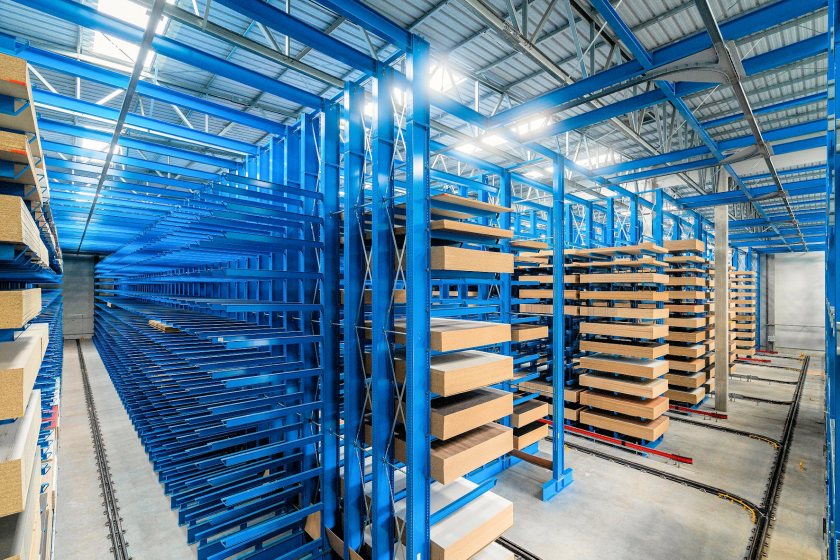
Another clear trend is that warehouses are building upwards. Rack heights have increased steadily in recent years, driven by advances in handling technology that allow forklifts and reach trucks to operate safely at greater heights.
Improved stability systems and sensor technology are enabling operators to maximise vertical space without compromising safety, helping businesses expand storage capacity within existing buildings.
At the same time, companies are moving away from inefficient layouts. Wide-aisle warehouses are increasingly being replaced by narrow-aisle designs, while mobile racking systems are being adopted where handling requirements allow.
Unstructured floor storage is also being phased out in favour of racking systems that offer better visibility, faster access to individual items and reduced product damage.
In sectors such as building materials, flow racking is gaining popularity. It delivers high space utilisation while allowing easier access to goods and supporting first-in, first-out stock management.
Flexibility is also driving demand for cantilever racking fitted with continuous mesh shelves. These systems allow goods of varying shapes and sizes to be stored without fixed compartment widths or obstructive uprights.
In the building materials trade, this makes it possible to store items ranging from bathtubs to washbasins side by side, allowing rapid changes to product ranges without major reconfiguration.
Warehouse organisation itself is becoming more professional, with businesses increasingly turning to partial automation and digital systems. Forklift guidance technology is being used to reduce empty runs and shorten travel distances, while warehouse management systems provide real-time visibility of stock and storage locations.
Digitisation is also influencing racking design, with features such as holders for signage and barcode labels helping integrate physical storage into wider IT systems.
Smaller businesses are following the same path. Craft firms and start-ups are increasingly investing in professional racking from the outset to improve efficiency, boost safety and present a more organised image to customers.
Demand is also being driven by infrastructure investment, particularly in sectors such as energy and water management, where cantilever racking is being used to store pipes and accessories more efficiently.
Sustainability has become another key factor in purchasing decisions. Buyers are placing greater emphasis on durable systems, long-term spare parts availability and resistance to mechanical wear, as well as the use of renewable energy in manufacturing.
OHRA says well-planned racking delivers benefits far beyond storage density. “Those who plan their racking technology strategically not only gain storage space, but also process quality, safety and future viability,” the company said.
It added that combining height-optimised systems with intelligent space use and flexible designs allows businesses to accommodate growing product ranges and rising customer expectations without expanding their footprint.