Northern Ireland’s economic growth will stall unless trade friction is urgently reduced through a UK-EU sanitary and phytosanitary agreement, the logistics industry has told the Secretary of State.
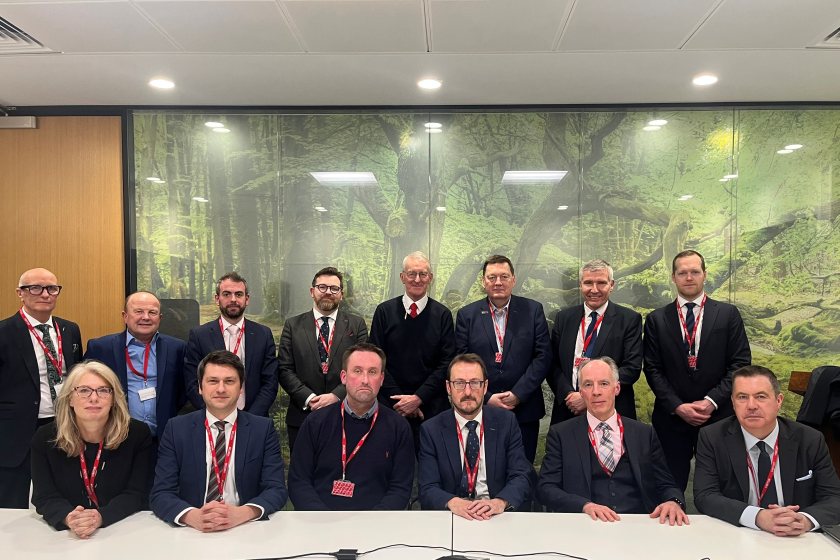
Business group Logistics UK made the call following a meeting in Belfast on 25 February between Northern Ireland Secretary of State Hilary Benn and members of the Northern Ireland Business Stakeholder Group.
Industry representatives pressed for a speedy SPS deal with the EU to ease the movement of goods, while also raising concerns about how the Windsor Framework is operating in practice.
There were further warnings about the potential impact of extending the maritime element of the UK Emissions Trading Scheme (ETS) to Northern Ireland, which could increase trade costs across the Irish Sea.
Ben Garratt, Logistics UK’s deputy director of public affairs, said the sector had used the meeting to highlight ongoing pressures on trade.
“This week’s meeting provided a great opportunity for our sector to make the case for a speedy introduction of an SPS agreement with the EU as well as to raise its concerns about the current trading situation in NI,” he said.
He added that it was “encouraging to see how receptive the Secretary of State was to the suggestions from industry on how trading relationships could be improved.”
While acknowledging that the Windsor Framework has improved arrangements compared to the Northern Ireland Protocol, Mr Garratt said practical challenges remain.
“The Windsor Framework is certainly an improvement on the Northern Ireland Protocol, but challenges remain, such as data checks, labelling requirements and a lack of guidance for hauliers,” he said.
He warned that logistics businesses also face the risk of higher shipping costs if the UK ETS is applied to maritime movements involving Northern Ireland.
“Together, these challenges risk deterring GB suppliers from the Northern Ireland market, as they could lead to added costs, discouraging investment, and ultimately increasing prices for consumers,” he said.
Logistics UK stressed the sector’s economic importance, noting that more than 6,000 businesses in Northern Ireland employ nearly 70,000 people — around 8% of the province’s workforce.
Mr Garratt said the industry was ready to work with government to strengthen trading relationships and unlock growth.
“As a sector, logistics is critical to the future success of NI’s economy,” he said. “The industry stands ready to act as a trusted partner and critical business voice to work with government and drive the economy forwards.”
The group argues that reducing red tape and providing greater regulatory certainty will be essential if Northern Ireland is to maximise its dual market access and deliver long-term economic expansion.