
Manual forklifts and autonomous warehouse robots can now be managed through a single dispatch system, following a major software upgrade from BlueBotics aimed at cutting costs and improving efficiency.
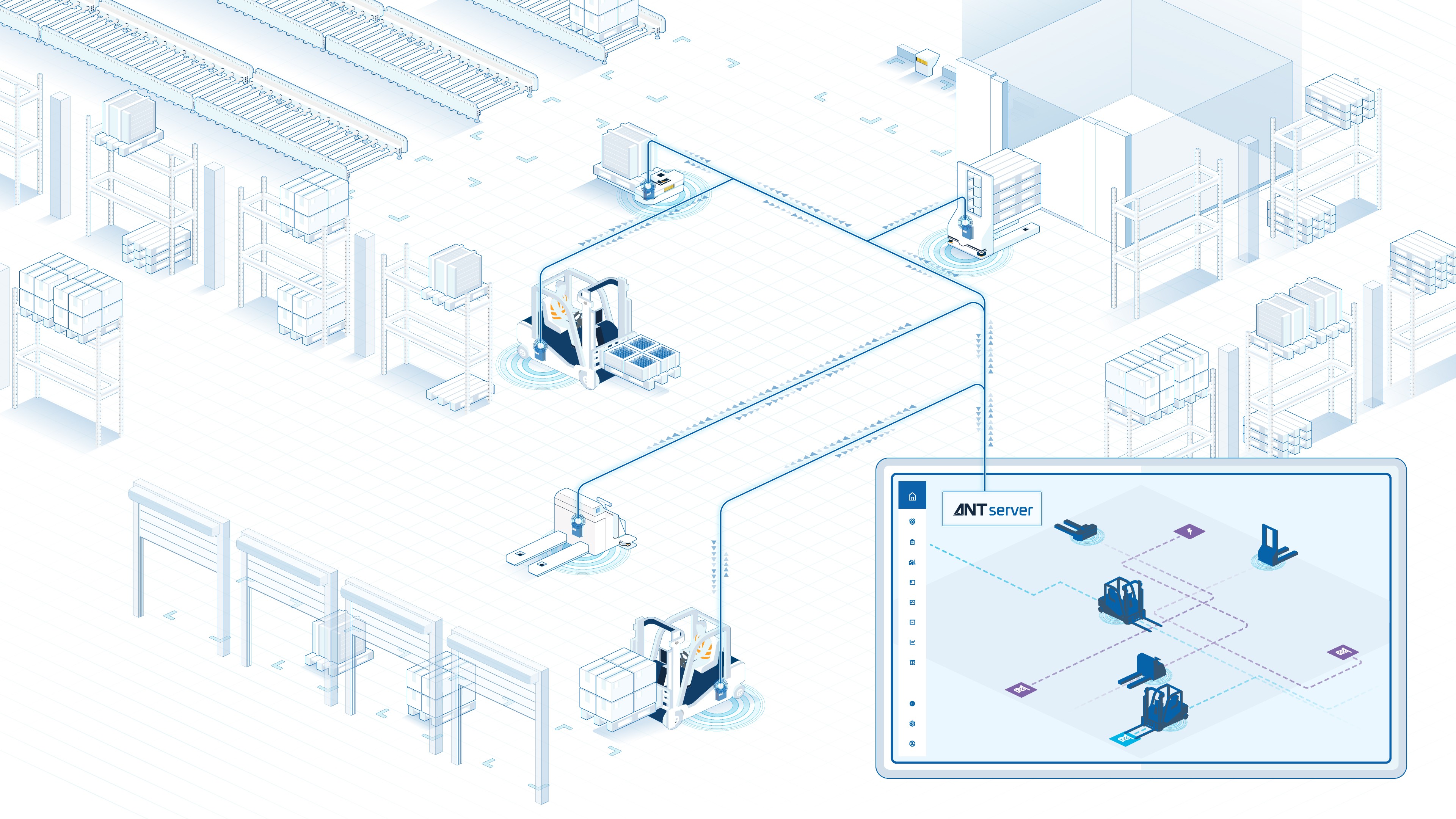
The Swiss navigation and fleet management specialist has introduced unified mission dispatch to its ANT locator solution, allowing businesses to coordinate manual forklifts and autonomous mobile robots from one central platform.
Announced on 17 November, the update enables the company's ANT server fleet management system to assign tasks to both manually operated vehicles and automated guided vehicles (AGVs) or autonomous mobile robots (AMRs).
By using real-time vehicle location data, the system can allocate jobs to whichever vehicle is best positioned to complete them, helping to reduce unnecessary journeys and improve productivity.
Dr Nicola Tomatis, chief executive of BlueBotics, said operating separate systems for manual forklifts and mobile robots creates unnecessary costs and operational complexity.
"By combining ANT locator's precise forklift positioning with ANT server's proven fleet management capabilities, customers can use one platform to dispatch missions to whichever vehicle is available."
The company says the integrated approach could simplify warehouse operations by reducing the need for multiple software licences, preventing overlapping tasks and making maintenance and troubleshooting easier.
A new in-cab human-machine interface (HMI) also allows forklift drivers to indicate their availability and accept assignments directly from their vehicles.
Beyond task allocation, the upgraded system is designed to improve traffic management in warehouses and other busy logistics environments where manual and autonomous vehicles operate alongside one another.
ANT locator continuously tracks forklift positions and feeds this information into ANT server, providing a live overview of vehicle movements across a site.
According to BlueBotics, this allows the system to coordinate interactions between manual forklifts and mobile robots, reducing the risk of traffic congestion, deadlocks and near-misses.
The technology also addresses a longstanding challenge in warehouse operations: tracking the precise location of pallets moved by manually operated forklifts.
Unlike autonomous vehicles, which generally follow programmed routes and designated drop-off points, manual forklifts can leave loads in different locations.
By continuously recording vehicle positions, ANT locator can provide location information to existing warehouse management systems, helping businesses track pallets from collection through to delivery.
The solution can also connect with manufacturing execution systems (MES), enterprise resource planning (ERP) platforms and other fleet management software.
BlueBotics says the latest update provides businesses with additional operational insights through heatmaps and analytics, allowing managers to identify heavily used routes, monitor traffic patterns and assess vehicle efficiency.
This information can help operators identify bottlenecks, reduce unnecessary movements and make better use of available warehouse space.
The company also offers optional tracking capabilities for personnel and other mobile assets operating in shared environments.
Tomatis said the expanded functionality would help businesses make better use of their existing logistics equipment while simplifying fleet management.
"Whether the goal is smarter vehicle coordination, simpler IT architecture, pallet traceability or stronger operational insights, the combination of ANT locator and ANT server brings all these capabilities together in one proven platform."
The update is intended for businesses operating mixed fleets of manual and autonomous vehicles, allowing them to coordinate material handling activities without relying on separate management systems.