

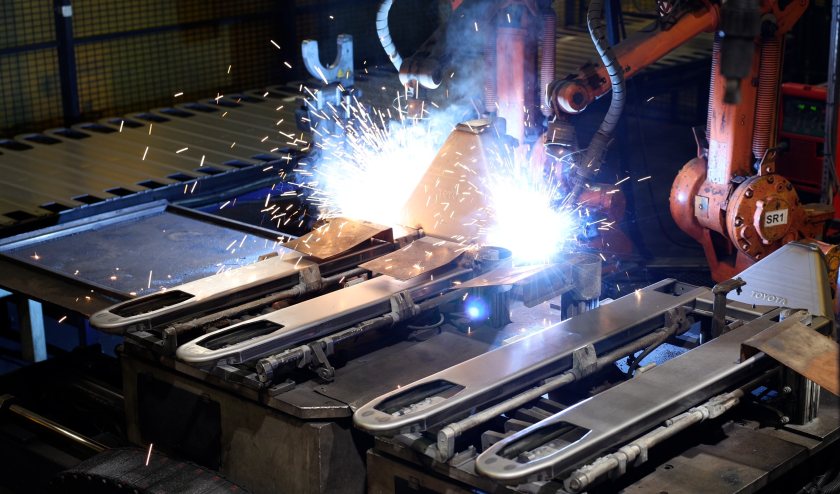
Toyota has cut emissions from one of its most widely used warehouse products by nearly a fifth, marking a significant step towards its net zero ambitions.
Toyota Material Handling Europe said it has reduced the carbon footprint of its Toyota Lifter LHM230 hand pallet truck by 18% by switching to low-emission SSAB Zero™ steel in key components.
The change applies to the forks and frames of the high-volume model, with the same material also introduced into parts of its BT Levio powered pallet trucks.
Steel production is a major source of carbon emissions, making it a critical focus area for manufacturers looking to decarbonise. By adopting lower-emission steel, Toyota said it is targeting reductions across its entire value chain as it works towards net zero by 2041.
Camilla Åkerman, programme manager for fossil-free products, said the partnership with SSAB is central to that effort, describing it as “combining their knowledge in lower-carbon steels with our target to reduce emissions all through the value chain”.
The results have been significant at component level. According to Toyota, emissions linked to the forks and frames have been cut by up to 75%, contributing to the overall 18% reduction measured on a cradle-to-gate basis.
Per Fyrenius, senior vice president of corporate development, said: “By using SSAB Zero™, we cut the emissions in the forks and frames in our hand pallet trucks by up to 75%, which accounts for 18% decarbonisation for the entire product”.
Before being rolled out, the new material underwent extensive testing to ensure it met performance standards. Åkerman said “the main challenge was verifying the material to ensure performance”, adding that despite initial hurdles, “the results were very positive”.
SSAB said the collaboration demonstrates that lower-emission steel can match conventional materials in demanding industrial applications.
Matts Nilsson, head of sales at SSAB Europe, said the company’s product “meets the same high-quality standards as conventional steel” and delivers “the same strength, durability, and reliability”.
Toyota Material Handling Europe produces around 80,000 hand pallet trucks and 15,000 powered models each year, meaning changes at scale could have a significant impact on emissions.
The company said the partnership represents a key milestone in its decarbonisation strategy and is now exploring how similar materials could be used more widely across its product range.
Åkerman said the firm is already seeing “real, measurable carbon savings” and described the rollout as a first for the sector.
SSAB added that the collaboration shows how joint industry efforts can accelerate climate progress, with Nilsson saying it proves companies can “really drive change when working together”.