

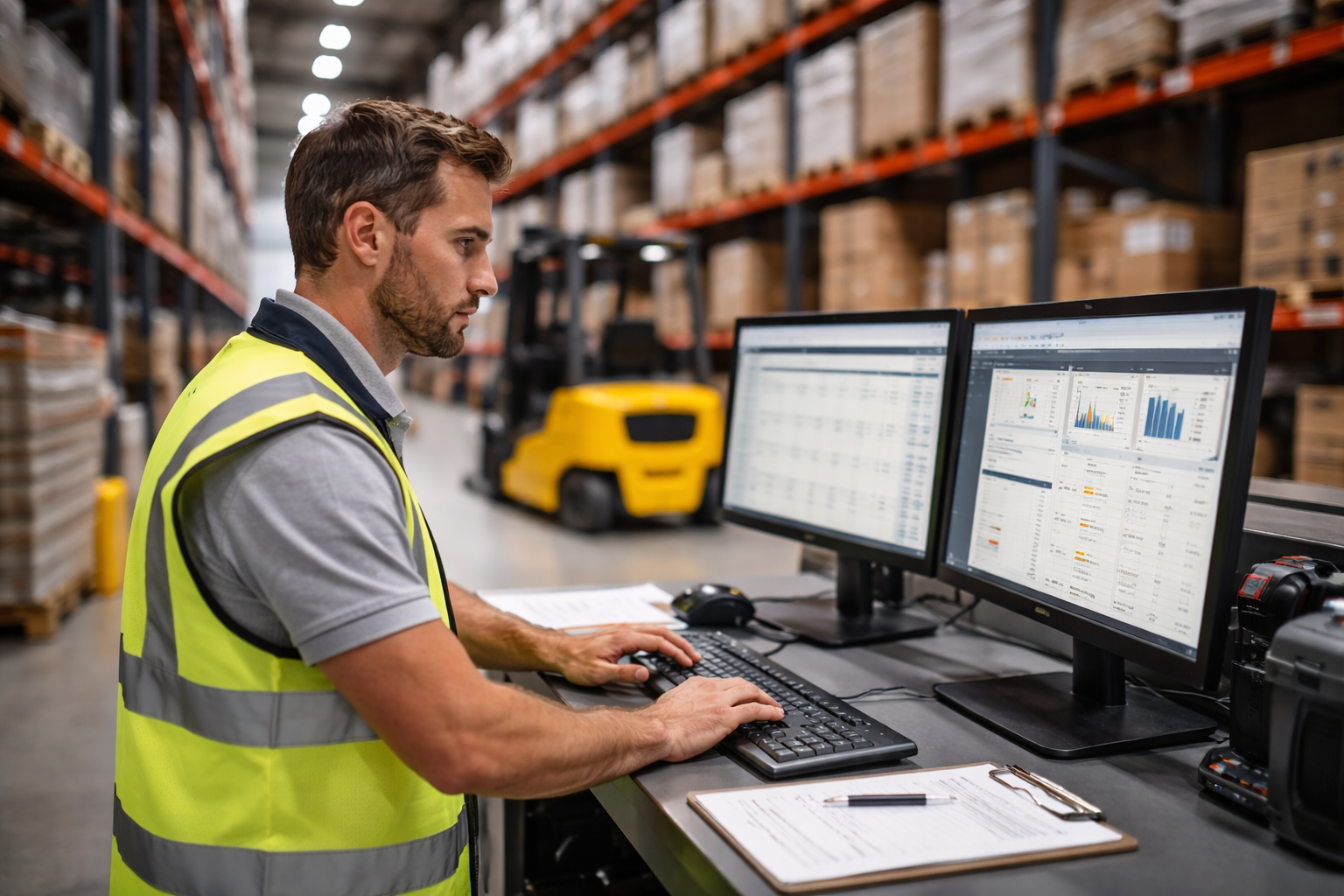
New research suggests that anxiety around workplace technology is becoming an increasing issue for employees across modern industries, a trend that is also beginning to affect workers in warehouses and logistics operations where digital systems, automation and connected equipment are rapidly expanding.
According to the latest Tech Anxiety Index 2026 report from IT support specialist ITRM, around 80% of workers say they have experienced anxiety related to workplace technology, highlighting how the pace of digital change is creating pressure across many sectors.
While the findings apply broadly across office based roles, the issues identified are increasingly relevant to the materials handling industry as warehouses adopt new technologies ranging from warehouse management systems and handheld scanning devices to telematics equipped forklift fleets and automated picking systems.
The study found that 88% of employees have experienced frustration or stress caused by technology in the workplace, while nearly 70% admit they are reluctant to ask for help when they encounter problems. For logistics operations where productivity depends heavily on digital systems functioning smoothly, this reluctance can have a direct impact on efficiency.
Interestingly, the report suggests that younger workers entering the workforce may be the most affected. More than 90% of entry level employees said they had experienced anxiety when dealing with workplace technology, despite being part of a generation often considered digitally confident.
Within warehouse environments this can create an unexpected skills gap. While younger employees are often comfortable with new technologies such as artificial intelligence tools, cybersecurity awareness and emerging digital platforms, many report struggling with routine workplace systems including documentation, reporting processes, spreadsheets and internal communication tools.
As warehouses become increasingly data driven, workers are expected to interact with a growing number of digital tools during everyday operations. Forklift operators, for example, may now use onboard fleet management systems that monitor vehicle performance and operator behaviour, while warehouse staff regularly interact with barcode scanning devices, inventory software and real time tracking platforms.
For businesses, this technological shift can deliver major gains in productivity and operational visibility. However, it also places new demands on employees who may be expected to master unfamiliar systems while maintaining the pace of physical warehouse work.
Dave White, Managing Director at ITRM, said the findings highlight a growing disconnect between the rapid adoption of new technologies and the level of support provided to employees.
“Many organisations assume that younger workers are naturally comfortable with technology because they have grown up with smartphones and social media,” he explained. “But workplace systems are very different. Without proper training and support, even confident digital users can struggle when they encounter unfamiliar platforms or software in a professional environment.”
Within warehouse operations this challenge is becoming more visible as distribution centres adopt advanced digital infrastructure. From automated inventory systems to telematics enabled forklifts and real time data dashboards, technology now plays a central role in the day to day functioning of many logistics facilities.
Industry observers say the key issue is not the technology itself but how it is introduced and supported within the workforce.
Mark Harrison, a warehouse operations consultant working with several UK distribution centres, said businesses often underestimate how quickly technology adoption can outpace staff training.
“Warehouse operators are investing heavily in digital systems to improve efficiency, but the human side of the transition can sometimes be overlooked,” he said. “If staff are expected to operate new systems without clear guidance or ongoing training, it can create frustration and slow down the very productivity improvements those technologies were designed to deliver.”
The research also revealed that four out of five entry level workers are hesitant to ask for help when facing technology issues, which can compound the problem. In busy warehouse environments where operational targets are closely monitored, workers may feel pressure to resolve issues themselves rather than risk appearing inexperienced.
This can lead to delays, mistakes or inefficiencies that affect overall performance.
Experts suggest that providing structured technology training at the start of employment can significantly reduce these challenges. Half of entry level workers surveyed said they would welcome more training opportunities related to workplace technology, while one in four indicated that improved IT support would make their jobs easier.
For logistics companies operating increasingly digital warehouses, investing in workforce training may become just as important as investing in new equipment or automation.
Sarah Collins, a logistics technology advisor specialising in warehouse systems, said the industry is entering a period where digital skills are becoming a fundamental requirement for warehouse roles.
“Forklifts, scanners, warehouse management software and automated systems are all generating huge amounts of data,” she said. “Employees need the confidence to interact with those systems effectively. The companies that support their staff through that transition are likely to see the biggest gains in productivity.”
With warehouse technology continuing to evolve rapidly, addressing technology related anxiety may become an important factor in maintaining efficient operations.
Warehouse operators are therefore increasingly reviewing training programmes and support structures as part of wider digital transformation strategies, recognising that successful technology adoption depends not only on the systems themselves but also on the confidence and capability of the people using them.