

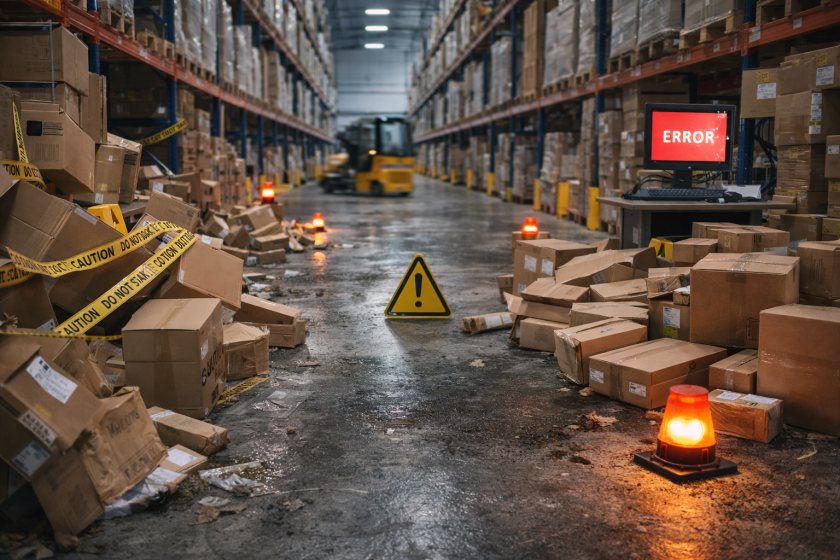
Warehouses are being left exposed to disruption — and it is costing them dearly.
A new market study from US-based distribution centre technology firm Lucas Systems claims a lack of agility in warehouse automation is driving up operating costs and leaving businesses struggling to respond to unexpected change.
The research found that 51% of US supply chain executives believe their automation systems are unprepared to cope with unforeseen changes, new requirements and disruptions.
More strikingly, 77% admitted that at least half of their hardware or software systems are too rigid to respond effectively when disruption hits.
That inflexibility is carrying a financial penalty.
Around 60% of those reporting rigid systems said they had incurred between 11% and 25% in additional operating costs or losses because their automation could not adapt quickly enough to new demands or unexpected events.
The statistically significant study, conducted by Lucas Systems in partnership with Wakefield Research, surveyed 114 US-based supply chain executives to assess the adaptability of their automation systems.
Disruptions ranging from system downtime and equipment failure to labour shortages and sudden spikes in demand continue to challenge warehouse operations.
According to the findings, 85% of respondents experienced up to 10 significant unplanned disruptions in the past year alone, while a further 7% reported more than 10 such incidents.
More than half (51%) said they are now facing more unplanned operational disruption than they were three years ago, in the period following Covid.
“Unplanned warehouse disruptions are on the rise since the Covid pandemic,” said Lucas Systems chief marketing officer Ken Ramoutar.
“If your automation can’t quickly adapt to in-the-moment shifts, then your warehouses are at a real disadvantage.”
He added that while the pandemic heightened awareness of the need for adaptability, many distribution centres have yet to implement self-optimising automation systems.
The study also found that 86% of supply chain executives consider adaptable warehouse technology to be critical.
However, 72% said it would take considerable effort to reconfigure their automation systems in response to disruption.
More than a quarter (26%) reported that adaptable automation had helped cut operational costs by more than 25%.
Lucas Systems has set out its vision for what it calls a more agile warehouse in its report, The Transformational Promise of the Dynamic Warehouse.
The company said it is investing in software designed to increase responsiveness, including tools such as Dynamic Work Optimisation, Dynamic Slotting and Dynamic Pallet Building.