

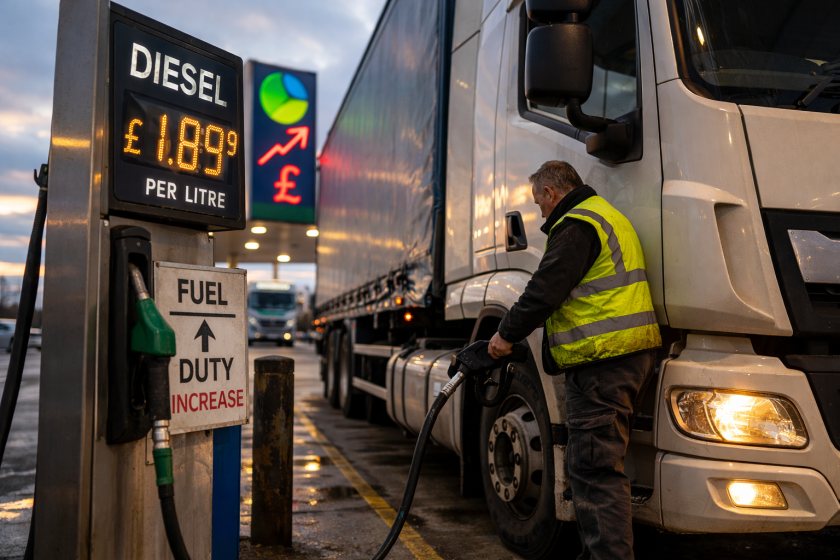
Britain’s logistics sector has warned that rising oil prices and trade disruption triggered by the escalating Middle East conflict could soon hit UK consumers — and is urging the Chancellor to scrap a planned fuel duty increase.
Business group Logistics UK is calling on Rachel Reeves to use her upcoming Spring Forecast to strengthen supply chain resilience and business confidence, including by reviewing her decision to begin increasing fuel duty this year.
The appeal comes as global trade routes face mounting pressure. The closure of the Strait of Hormuz and the cancellation of flights have already begun to disrupt supply chains, driving up costs through rerouting, delays and higher insurance premiums.
The Strait of Hormuz is one of the world’s most strategically important shipping corridors, particularly for oil.
Ben Fletcher, chief executive of Logistics UK, said: “Approximately one fifth of the world’s oil supplies move through the Strait of Hormuz every single day and with this shipping corridor disrupted, the global price of oil is already climbing: this increased cost will soon be seen at the UK’s pumps.”
He warned that the logistics industry, which operates on tight margins, cannot absorb sustained fuel price rises.
“Our sector, which delivers all the goods that the UK relies upon every day, already operates on incredibly narrow margins and any significant fuel price rises would have to be passed on to the customer,” he said.
The organisation is therefore urging the Treasury to reconsider the fuel duty rise announced in the 2025 Autumn Budget, arguing that further tax increases risk compounding inflationary pressures at a time of global instability.
Fletcher added: “We are therefore urging the Chancellor to focus on bolstering business confidence and supply chain resilience, including by reviewing her decision to begin increasing fuel duty this year… to prevent further inflationary pressure at a time when the global economy is so disrupted.”
The industry body also cautioned that the intensifying military situation in the region could have longer-term consequences for trade flows.
“The escalating military situation in the Middle East risks seriously impacting international trade,” Fletcher said.
While logistics firms are seeking alternative routes and adjusting operations, he acknowledged there will be consequences.
“As a sector, logistics is flexible and is already seeking alternative routes but there will be an impact on the UK’s supply chain across the summer on those goods which arrive in the UK by sea,” he added.
Logistics UK said it is maintaining close contact with government to monitor developments, mitigate disruption for businesses and consumers, and manage risks to logistics personnel operating in the Middle East.
The group represents companies across road, rail, air and water freight, as well as retailers and manufacturers reliant on efficient goods movement. It argues that with decarbonisation, technological change and geopolitical instability reshaping global trade, the resilience of the UK’s supply chain has never been more critical.