

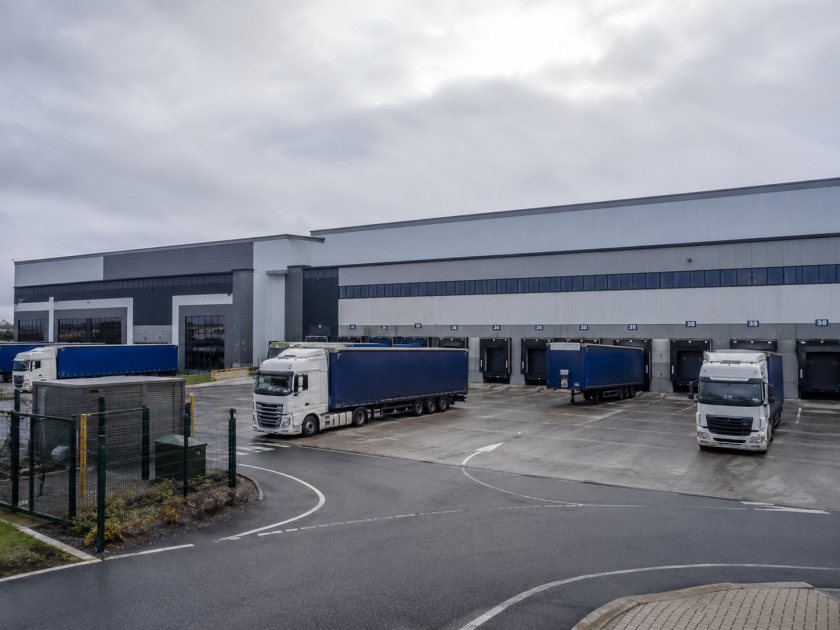
A growing gap between warehouse completion and permanent grid connection is forcing more UK developments to rely on temporary power during commissioning and early operation, according to Wernick Power Solutions.
The company has published a new insight report, *Bridging the Warehouse Power Gap*, examining how delays, phased grid connections and rising electricity demand are changing the role of temporary power across the logistics and distribution sector.
Wernick said larger and more complex warehouse developments are increasingly ready to operate before permanent grid power is fully available.
The issue is being driven by grid constraints, phased connections and higher electrical demand from automation, refrigeration and digital systems.
As a result, temporary power is no longer being used only as a short-term construction utility.
Instead, many sites are entering commissioning and early operational phases while still dependent on temporary systems.
Nick Crane, managing director at Wernick Power Solutions, said: “Temporary power is no longer just something that sits quietly on a building site.
“We are seeing it support commissioning, early operations and sometimes live warehouse systems for extended periods. That changes the risks, the responsibilities and the expectations around how it is planned and managed.”
The report draws on Wernick’s project experience across logistics, manufacturing and distribution sites.
It highlights how temporary power can now span construction, commissioning and operations, creating new challenges around ownership, visibility, cost and carbon impact.
The report also warns that traditional approaches to temporary power may struggle to meet the demands of modern warehouse environments.
Electrical demand can rise quickly as automation, refrigeration, control systems and digital infrastructure are brought online in stages.
Wernick said projects risk greater uncertainty if temporary power is not planned early or if responsibility for it is unclear.
The company said this can become particularly challenging at the point when buildings are expected to move smoothly from construction into live operation.
Wernick has launched the report as part of a wider campaign to help developers, contractors and warehouse operators better manage the gap between build completion and full grid connection.
Mr Crane said: “The industry has done an excellent job of designing and building highly sophisticated facilities.
“What we now need is the same level of attention on how those facilities are powered through the messy middle between build and full grid connection.”
The *Bridging the Warehouse Power Gap* report is available to download from Wernick Power Solutions.