

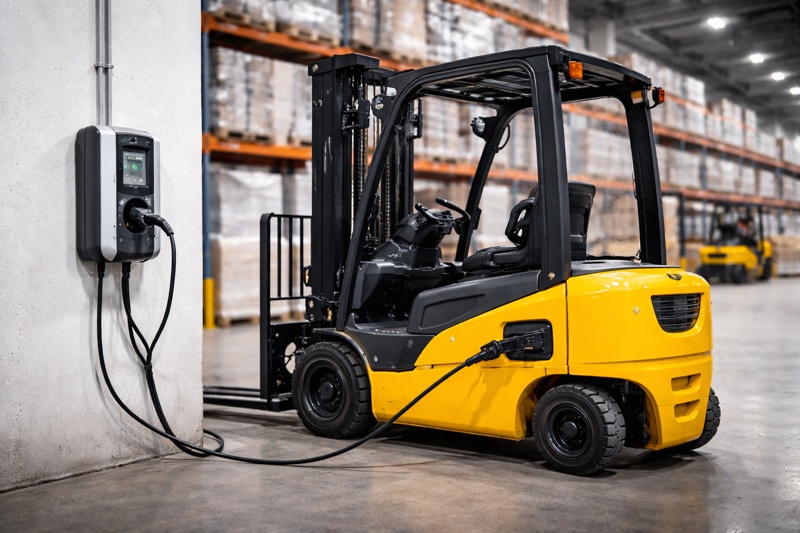
Electric forklifts are rapidly becoming the dominant force in the materials handling sector as manufacturers expand lithium ion powered ranges and warehouse operators accelerate the shift away from diesel and LPG powered trucks.
Across Europe and the UK, equipment suppliers are increasingly focusing their product development on electric models as sustainability targets, tightening emissions rules and advances in battery technology reshape the forklift market. New product launches and expanded electric ranges are becoming common as manufacturers compete to meet growing demand from logistics operators looking to reduce emissions while maintaining productivity.
One of the latest developments in this transition is the launch of new compact electric forklift models designed specifically for modern warehouse environments. Manufacturers are introducing three wheel electric forklifts and expanded lithium ion battery options to improve efficiency in confined warehouse spaces while delivering the performance traditionally associated with internal combustion trucks.
These machines are particularly suited to high density warehouses where manoeuvrability, quick charging and low maintenance requirements are critical. Three wheel designs allow operators to navigate tight aisles and busy loading areas more easily than conventional four wheel trucks, making them attractive for distribution centres handling increasing volumes of palletised goods.
The rapid growth of ecommerce has played a significant role in accelerating this shift. As fulfilment centres expand and logistics networks become more complex, warehouse operators are searching for equipment that can operate continuously with minimal downtime. Lithium ion batteries allow forklifts to be opportunity charged during breaks, eliminating the need for lengthy battery changes or dedicated charging rooms.
Technological advances are also expanding the capability of electric forklifts beyond traditional indoor roles. Earlier generations of electric trucks were often limited to light duty warehouse work, but modern models now offer lifting capacities comparable to diesel machines and can operate reliably in outdoor yards and demanding industrial environments.
Industry analysts say this transformation is part of a broader shift across the materials handling sector. For decades the forklift market was dominated by internal combustion trucks, but the balance has changed dramatically as companies pursue more sustainable operations and respond to regulatory pressure on emissions. Electric models are now capable of performing heavy lifting tasks once reserved for engine powered equipment, with capacities of eight tonnes or more increasingly available.
The move toward electrification is being reinforced by wider corporate sustainability strategies. Many large retailers and logistics providers have committed to reducing carbon emissions across their operations, and converting forklift fleets to electric power offers a relatively straightforward way to make progress toward those targets.
Electric forklifts also provide operational advantages beyond environmental benefits. Lower maintenance requirements, quieter operation and reduced vibration can improve working conditions for operators while lowering long term operating costs. For warehouse managers responsible for large fleets, these factors can translate into significant productivity gains over the lifespan of the equipment.
Manufacturers are responding to this growing demand by investing heavily in battery technology and smart fleet management systems. Many new forklifts now include integrated telematics platforms that allow operators to monitor battery health, track usage patterns and schedule preventative maintenance automatically.
These digital tools are increasingly important for logistics businesses managing dozens or even hundreds of trucks across multiple sites. By analysing operational data in real time, companies can optimise equipment usage, identify underutilised assets and reduce downtime caused by unexpected mechanical issues.
Despite the rapid progress of warehouse automation, forklifts remain central to most materials handling operations. Autonomous mobile robots and automated guided vehicles are expanding within distribution centres, but forklifts continue to handle heavy pallet movements, trailer loading and bulk storage tasks that require high lifting capacity and versatility.
For this reason, many equipment manufacturers see electric forklifts not as a replacement for existing logistics infrastructure but as a natural evolution of it. The machines are becoming smarter, cleaner and more efficient while retaining the core capabilities that have made forklifts indispensable to warehouses and industrial facilities worldwide.
As investment in logistics infrastructure continues to grow, the role of electric forklifts is expected to expand further. Industry forecasts suggest that electrified trucks will account for an increasing share of global forklift sales over the coming decade as companies modernise fleets and adapt to stricter environmental standards.
For the materials handling sector, this transformation represents one of the most significant technological shifts since the introduction of the modern counterbalance forklift. What began as an alternative power option is now rapidly becoming the industry standard, reshaping how warehouses move goods and how manufacturers design the next generation of materials handling equipment.