

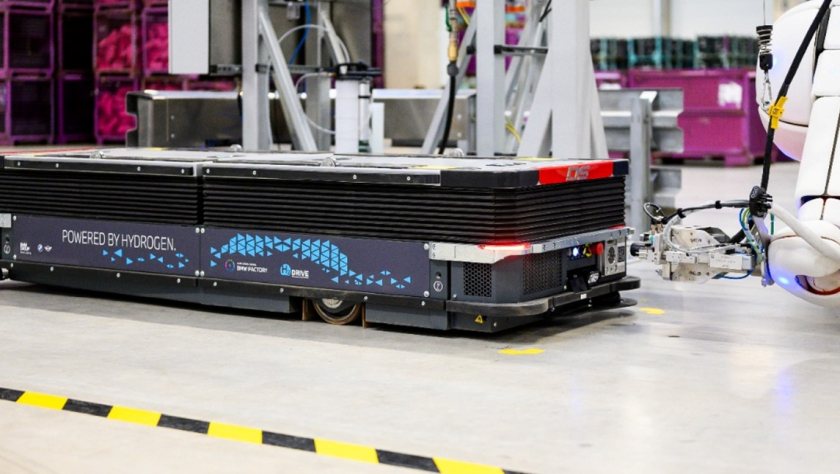
BMW is rolling out a next-generation fleet of hydrogen-powered Automated Guided Vehicles (AGVs) at its Leipzig plant, following a three-year trial that showed fuel cells outperformed batteries across reliability, uptime and environmental performance.
The German manufacturer has commissioned 130 AGVs built specifically around Loughborough-based Intelligent Energy’s IE-POWER™ hydrogen fuel cell technology. Fifty units are already operating at Leipzig, with the remainder due to enter service within six months.
Leipzig is BMW’s flagship site for advanced automation, using AGVs extensively to move parts and components across the factory floor. The new hydrogen models were developed with Austrian automation specialist DS Automotion and are the first AGVs designed from the ground up to incorporate Intelligent Energy’s fuel cell systems.
The rollout follows a long-term trial in which existing battery AGVs were retrofitted with fuel cells. BMW found the hydrogen-powered machines ran for longer, refuelled in seconds instead of hours and significantly reduced downtime. According to the company, the gains in operational efficiency allowed it to cut the fleet size by 20% while still maintaining performance — all while delivering zero-emission operation using green hydrogen.
David Fields, head of IE-POWER Stationary and Standby Power Solutions at Intelligent Energy, said the project marked a major validation of the company’s fuel cell technology. “The three-year trial with BMW is the most comprehensive case study yet for our hydrogen fuel cells in an AGV application and the results speak for themselves,” he said. He added that “uptime and reliability are critical” in intralogistics, making fuel cells well suited to automated material-handling fleets.
Intelligent Energy’s fuel cells are developed in the UK and use a patented air-cooling system to deliver high energy density in a compact, lightweight package. The technology is already used in forklifts, access platforms and other warehouse equipment.
BMW Leipzig, opened in 2005 and backed by €5 billion of investment, employs 6,800 staff and produces around 1,300 vehicles per day. Dr Stefan Fenchel, project lead for sustainability at the plant, said the fuel cell AGVs had proven their value during the trial, especially in eliminating charging downtime. “By removing this constraint, we now have a more flexible fleet that we have been able to reduce in size by 20 per cent – a clear gain in efficiency,” he said. “This new fleet of hydrogen AGVs marks another step in BMW’s commitment to zero-emission manufacturing technologies and supports our goal of setting the benchmark for sustainable intralogistics.”