

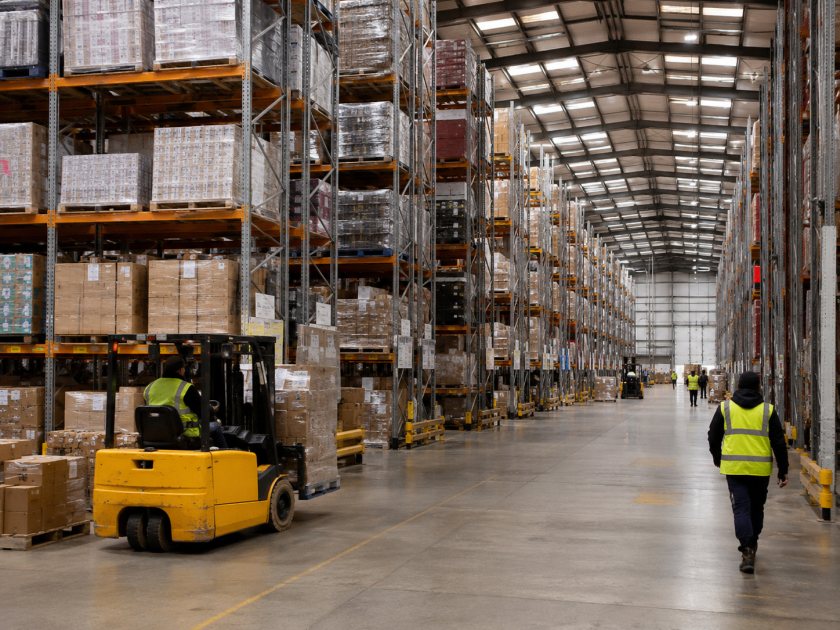
The UK warehousing workforce may be more than 70% larger than official figures suggest, according to new analysis.
Research carried out for the UK Warehousing Association found that around 760,000 people work in warehousing across the UK.
That compares with Office for National Statistics figures showing around 440,000 workers employed in the industry in 2025.
The UKWA said the official total was likely to be a substantial underestimate because it did not include many warehousing and storage roles recorded within other sectors.
These include roles within retail, manufacturing and other parts of the wider supply chain.
The analysis was carried out for UKWA by Kirsten Tisdale of logistics consultancy Aricia.
It suggests the true scale of the warehousing sector is significantly larger than previously understood.
Even using the ONS figure, jobs in warehousing have increased by 40% since 2011.
That is well ahead of employment growth across the wider economy, where job numbers have risen by 14% over the same period.
The growth of online retail has contributed to rising employment in warehousing.
However, research by Savills and the UKWA in 2024 found that third-party logistics providers and high street retail took up more warehousing space than online retail.
The UKWA said the findings showed that warehousing should be recognised as one of the UK’s most important employment sectors.
It also called for greater government support for career pathways in the industry.
Clare Bottle, chief executive of the UKWA, said: “These figures give us the clearest picture yet of the real contribution of the warehousing sector to the UK.”
She said public perceptions of warehousing jobs had not kept pace with the modern industry.
“Perceptions have not caught up, however, and too many people still think of jobs in our industry as dirty, cold, manual labour,” she said.
“The truth is that warehousing is brilliant at both creating entry-level opportunities and giving people a career ladder to climb.”
Ms Bottle said UKWA members were facing recruitment challenges beyond warehouse operative roles.
She said businesses were also struggling to find team leaders and supervisors.
“Our members face just as big a gap in finding team leaders and supervisors as they do in recruiting warehouse operatives,” she said.
The UKWA said problems with the apprenticeship system were holding back skills development in logistics.
Ms Bottle said companies had only been able to use about a third of the money they had paid into the Apprenticeship Levy.
“A major part of the issue is that the apprenticeship system has not been working for logistics,” she said.
The UKWA is calling for Skills England to approve a Warehouse Manager apprenticeship.
Ms Bottle said this was needed “to support career development for people joining the sector, drive productivity, and ultimately help the entire economy to grow.”
The association said stronger recognition of warehousing was needed as the sector continues to play a central role in retail, manufacturing, logistics and supply chains.