

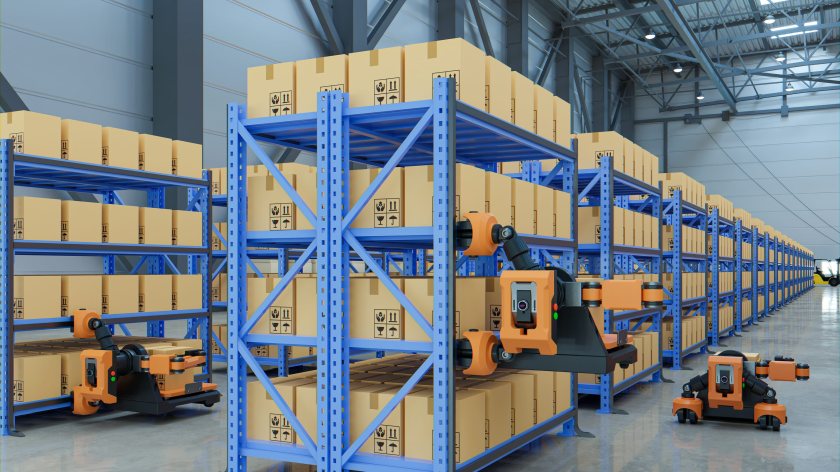
Warehouse automation projects risk underdelivering if businesses focus on the robots but fail to integrate them properly with existing systems, workflows and employees, Exotec has warned.
Investment in automation is accelerating as operators look to increase warehouse productivity and reduce their reliance on manual processes. Gartner predicts that 50% of new warehouses in developed markets will be designed as robot-centric systems by 2030.
However, Exotec says the benefits of automation can be undermined when businesses fail to consider how new technology will fit into the wider operation.
Problems can emerge when inventory and order flows are not redesigned around automated systems, or when employees are insufficiently prepared to operate and support the technology once it goes live.
Asaf Curelaru, Head of Deployment & Maintenance UK & Ireland at Exotec, said: “The success of a warehouse automation project depends not only on the robots themselves, but on how effectively they integrate with existing systems and workflows, while supporting the people using them every day.”
He said selecting the right technology was only one part of the challenge, with businesses also needing to ensure automation delivers value within day-to-day operations.
“The biggest challenge is not simply choosing the technology. It’s making sure that technology delivers value within the operation.
“The implementation needs to work effectively with existing systems, and workflows need to be properly aligned around it. Businesses are not just buying robots, they have to think about automation as part of a wider operational system.”
Exotec also cautioned against relying too heavily on assumptions made during the early stages of an automation project.
Large-scale implementations can take years to move from the initial business case to full operation. During that period, customer requirements, labour availability and company priorities can shift significantly.
“Automation projects can take years from the initial business case to full operation,” Curelaru said. “During that time, customer demand, order profiles, labour availability and business priorities can all change.”
He argued that businesses should build enough flexibility into both their automation technology and operating models to respond to changing conditions.
“Rather than assume the operating environment will remain exactly as originally designed, businesses need the flexibility to adapt instead of relying on the technology alone to solve the problem.”
Exotec said automation should therefore be treated as a broader operational change programme rather than simply a technology installation.
Operations, engineering and frontline employees should be involved from the outset, according to Curelaru, rather than expecting the system itself to address every operational challenge after launch.
“Businesses should treat the implementation of automated systems as an operational change programme involving operations, engineering and frontline teams from day one. It is unrealistic to expect a system to go live and solve all of the organisation’s problems overnight, without recognising the work required around it,” he said.
Curelaru added that compromises may also become necessary once a system moves from the design stage into a live warehouse environment.
“There will always be trade-offs, and assumptions made during system design do not always survive contact with the live operation. That’s where flexibility becomes important: both in the technology and in the operating model around it.”
He concluded that successful warehouse automation depends on treating technology, employees and operational processes as interconnected parts of the same system.
“The technology matters, but successful automation is ultimately about the system around the technology. When operations, people and technology are designed together, automation has a far better chance of delivering what the original business case promised,” Curelaru said.