

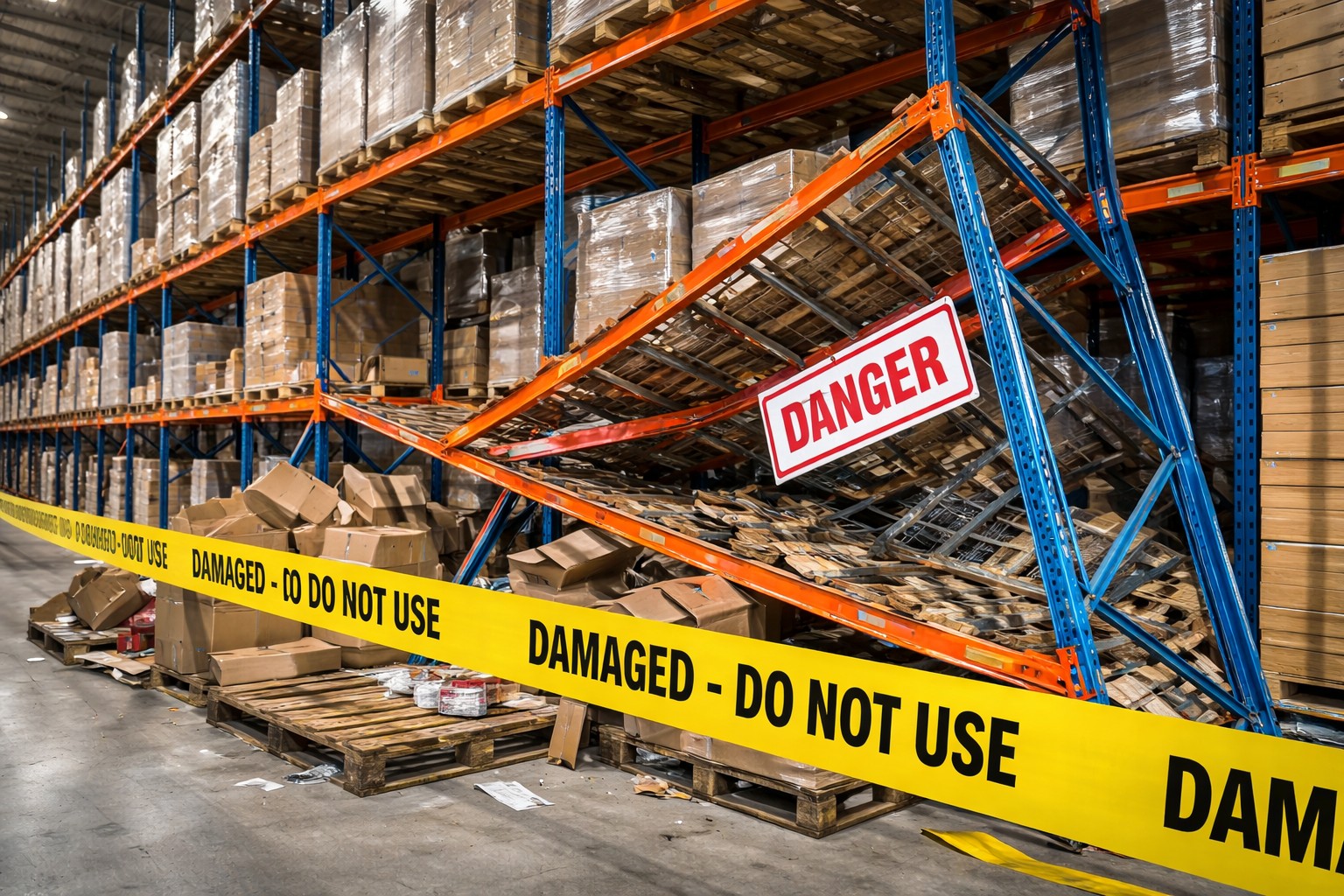
Warehouse safety specialists are urging operators to review racking inspection and maintenance procedures after a series of incidents across the logistics sector highlighted the risks associated with poorly managed storage systems. While warehouse racking is designed to handle heavy palletised loads and constant forklift activity, experts warn that structural failures can occur if installations are damaged, overloaded or not regularly inspected.
The warning follows a recent fatal incident involving a racking collapse at a warehouse site in West Yorkshire, which resulted in enforcement action after two workers lost their lives during testing operations. The case has again brought attention to the importance of safe working practices around storage structures, particularly when systems are being installed, modified or load tested. However, safety professionals say the wider issue goes far beyond a single incident and reflects broader operational pressures across modern warehouse environments.
Racking forms the backbone of most distribution centres, allowing companies to maximise storage density while maintaining efficient access for forklift trucks and other handling equipment. As warehouse footprints grow larger and storage heights increase, the loads placed on racking systems have also risen significantly. In many modern facilities pallets are stacked several metres high, placing considerable stress on beams, frames and floor fixings.
Despite the engineered strength of these systems, racking is particularly vulnerable to impact damage from materials handling equipment. Forklift trucks manoeuvring in narrow aisles can easily strike upright frames or beam connectors, especially in high throughput operations where speed and productivity are prioritised. Even relatively minor impacts can weaken structural components over time, increasing the risk of collapse if damage is not identified and repaired quickly.
Industry guidance has long highlighted vehicle impacts as one of the most common causes of racking failure. When uprights are bent or connectors loosened, the load bearing capacity of the system can be significantly reduced. If these problems are left unaddressed, the structural integrity of an entire bay can be compromised, potentially triggering a domino effect where multiple sections of racking collapse.
Another key risk comes from incorrect loading practices. Pallets that exceed the design weight of a racking system or loads that are unevenly distributed can place excessive pressure on beams and supports. In busy warehouses where stock is constantly being moved, there is also the possibility of pallets being placed incorrectly, creating unstable loads that may shift or fall.
Warehouse operators are also dealing with increasing demand for storage capacity as ecommerce growth drives higher inventory levels. This has encouraged many companies to extend racking systems vertically or reconfigure layouts to accommodate additional pallet positions. While such changes can improve efficiency, they also require careful planning to ensure structures remain compliant with their original design specifications.
Safety experts say that regular inspection remains the most effective way to prevent serious incidents. UK guidance recommends that warehouse racking should be visually checked on a frequent basis by trained personnel, with more detailed inspections carried out periodically by competent specialists. These inspections can identify issues such as bent frames, missing locking pins, loose floor fixings or damaged beams before they escalate into serious hazards.
Clear reporting procedures are also essential. Workers operating forklifts or working around storage systems should be encouraged to report any damage immediately so that affected areas can be isolated and repaired. In many facilities damaged bays are temporarily unloaded or marked out of use until repairs can be carried out.
Protective measures are increasingly being introduced to reduce the risk of forklift impacts. These can include upright guards, column protectors and guide rails designed to shield structural components from vehicle contact. In narrow aisle operations, wire guidance or rail guidance systems can also help ensure trucks remain correctly aligned within aisles.
Training plays a central role in preventing racking damage. Forklift operators must understand both the limitations of the equipment they are using and the design capacity of the racking systems they interact with. Incorrect handling of pallets, high speed manoeuvring and poor load placement can all contribute to structural stress within storage systems.
The Storage Equipment Manufacturers’ Association has repeatedly emphasised the importance of maintaining racking in line with established safety standards. Industry guidance such as the Health and Safety Executive’s HSG76 publication outlines clear responsibilities for warehouse operators, including the need for routine inspections, maintenance procedures and safe loading practices.
As warehouse automation continues to develop, some operators are also investing in monitoring technologies that can detect structural stress or impacts in real time. Sensors attached to racking frames can alert managers when a significant collision has occurred, enabling immediate inspections before damage leads to further problems.
While major racking collapses remain relatively rare compared with the scale of the UK warehousing sector, the consequences can be severe when they do occur. Falling pallets, collapsing frames and shifting loads can pose serious risks not only to workers but also to expensive inventory and handling equipment.
With distribution centres handling growing volumes of goods and operating at increasingly high storage densities, maintaining the integrity of racking systems remains a critical safety priority. Reviewing inspection regimes, ensuring damaged components are replaced promptly and reinforcing safe forklift practices are among the key measures warehouse operators continue to focus on as part of wider efforts to improve safety across logistics facilities.