

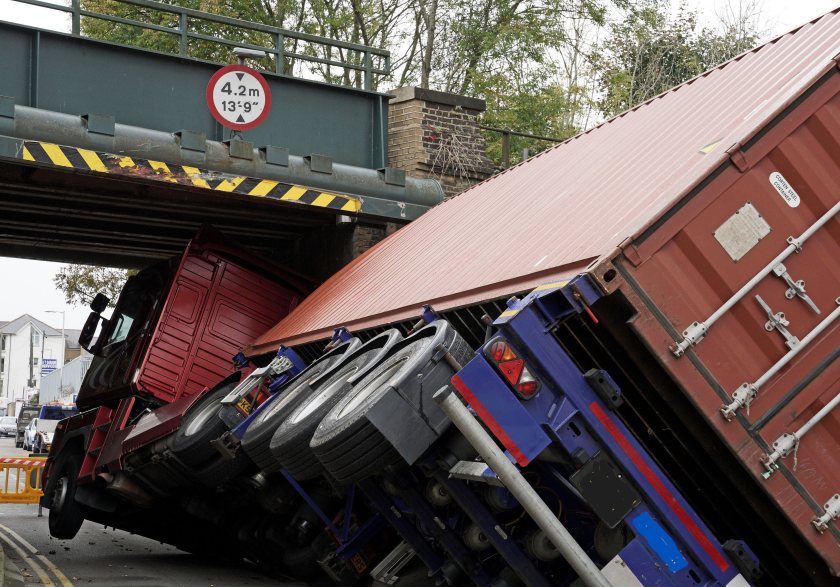
Bridge strikes are happening every five hours on UK roads — and fleets are being urged to act.
New figures from Network Rail reveal 1,666 bridge strikes were recorded between April 2024 and March 2025, causing more than 120 days of delays for rail passengers and costing taxpayers around £23 million in a single year.
The majority of incidents involve high-sided vehicles and are often preventable, with poor route planning and lack of awareness around vehicle height among the key causes.
Some bridges are struck repeatedly each year, underlining ongoing concerns across the industry and prompting renewed calls for greater vigilance from operators and drivers.
Durite is now highlighting the role technology could play in reducing these incidents, with the launch of its AI Low Bridge Detection System designed to identify risks before drivers reach hazardous structures.
The system combines camera technology, artificial intelligence and high-accuracy GPS linked to a UK low bridge database, enabling early warnings when vehicles approach restricted clearances.
John Nobbs, sales director at Durite, said the issue goes far beyond infrastructure damage. “The cost of bridge strikes is not just damage and disruption, it’s about the risk to lives, the knock-on impact on road and rail users, and the reputational and operational consequences for fleets,” he said.
He added that such systems can provide “timely alerts when approaching hazardous clearances”, but stressed they are “a supplement to, rather than a replacement for, careful route planning and standard safety procedures”.
The technology is now being supplied by Sentinel Systems as part of its wider vehicle safety offering, reflecting broader industry efforts to improve fleet safety and reliability.
John Little, managing director at Sentinel Systems, said features such as system compatibility and ease of use set the technology apart. He highlighted “the clear warning provided to drivers when comparing bridge height to vehicle height” as a key advantage.
He also pointed to flexibility for operators managing different loads, noting the system’s “ability to programme the vehicle height into the system” is particularly beneficial for fleets carrying variable height cargo.
Little added that the system is “high quality, easy to use and simple and quick to install”, while emphasising shared ambitions between the two companies to improve safety across commercial fleets.
Despite advances in technology, industry guidance continues to stress that route planning remains one of the most effective ways to prevent bridge strikes.
Durite said AI-driven tools should be seen as part of a wider safety approach, supporting driver awareness and training rather than replacing them.
“Quite simply,” Nobbs added, “the key is to provide drivers with accurate, timely alerts as a safety aid,” while reinforcing that such systems “do not replace the essential task of planning safe routes in advance”.
The company said its detection system integrates with wider vehicle safety camera technology and connected fleet systems, allowing for deployment across mixed fleets while delivering real-time alerts and visual support.
With pressure mounting on haulage and logistics operators, the industry is increasingly looking to technology to reduce avoidable incidents — and the costly disruption they cause.